Esping-andersen welfare state regimes Gosta Esping-Andersen’s ‘Three Worlds of Welfare Capitalism’ (TWWC) () typology of welfare states has been termed a ‘modern classic’ (Emmenegger et al ). This path-breaking work has become the basis for a whole academic industry described as the ‘Welfare Modelling Business’ (Abrahamson ; Powell and Barrientos , ).

What is a liberal welfare state Gøsta Esping-Andersen (pronounced [ˈjøstæ ˈespe̝ŋ ˈɑnɐsn̩]; born 24 November ) [2] is a Danish sociologist whose primary focus has been on the welfare state and its place in capitalist economies. Jacob Hacker describes him as the "dean of welfare state scholars." [3].
Esping-andersen welfare state typology Gøsta Esping-Andersen’s The Three Worlds of Welfare Capitalism is among the most influential works in the study of welfare states. Rather than conceiving of welfare and industrial policy on a single state-market axis, Three Worlds develops a typology to situate welfare states within broad and complex historical trajectories.

Decommodification Van Kersbergen and Vis classified Esping-Andersen’s typology as being ‘real typical’ due to the assessment of cases. From a methodological point of view, his approach is unusual, because the types of welfare regimes also present country clusters.
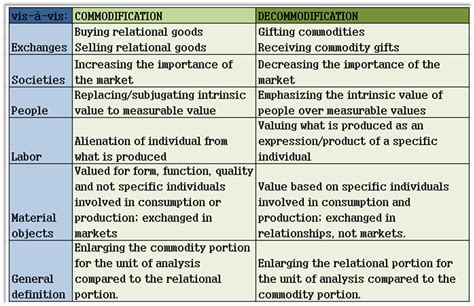
3 types of welfare states In Esping Andersen’s major and most influential work, written in ‘The Three Worlds of Welfare Capitalism’, he stated that de-commodification and also social stratification of a country are the key issues in terms of assessing the welfare state.
Esping-andersen welfare state pdf We begin by discussing Esping‐Andersen's paradigmatic typology of welfare states and consider why it has had such a major impact. Next we survey the debate that has resulted and consider the refinements of typology that this debate had generated.
Is the three world typology still valid
In The three worlds of welfare capitalism (), 13 Esping‐Andersen presents a typology of 18 Organisation of Economic Cooperation and Development (OECD) welfare states based upon three principles: decommodification (the extent to which an individual's welfare is reliant upon the market, particularly in terms of pensions, unemployment. Esping-andersen welfare state summary decades has certainly been Gøsta Esping-Andersen's book "The Three Worlds of Welfare Capitalism". I think it is not unfair to label the typology of OECD welfare states as developed in the book as essentially 'Sergio-Leonesque'. Although Esping-Andersen always attempts to base his comparative assessment of welfare state regimes on.